How to photograph damage for a salvage vehicle listing
The photos buyers of damaged vehicles look for, how to show hail dents, collision damage and the interior clearly, and what to keep out of your pictures.
General guidance. No specialist review is claimed unless named on this page.
— NHTSA flood-vehicle assessment and battery guidance; photography advice is a DNF checklist, not a vehicle inspection.
For a buyer a few hours away, your photos are the only look at the vehicle they'll get before they make an offer. People who buy damaged vehicles study them before anything else, and they're good at spotting what a listing leaves out. Clear photos bring offers from buyers who already know what they're buying, and those are the offers that turn into sales.
Every listing needs at least 4 photos, including a close-up of the damage. We recommend 8 clear photos for broader coverage.
Photos should not require starting, charging or energizing an unassessed damaged vehicle. Use existing evidence and mark missing readings as unknown. NHTSA recommends assessing a potentially flood-damaged vehicle before starting it. For a damaged EV, follow the condition-pack guide and seek qualified help with condition or handling questions.
Light, place and the shots to take
Bright overcast daylight is best, with no harsh shadows or glare. Skip night shots and colored shop lights, and find an open space where you can walk all the way around the vehicle. Take out personal items and trash and wipe the glass, but don't clean away the evidence of a leak or a flood line. Hold the phone level and shoot in landscape orientation.
Then take the set buyers expect, which is also what the listing form suggests:
- The front, straight on and from each front corner.
- The rear, straight on and from each rear corner.
- Each side, with the whole vehicle in the frame.
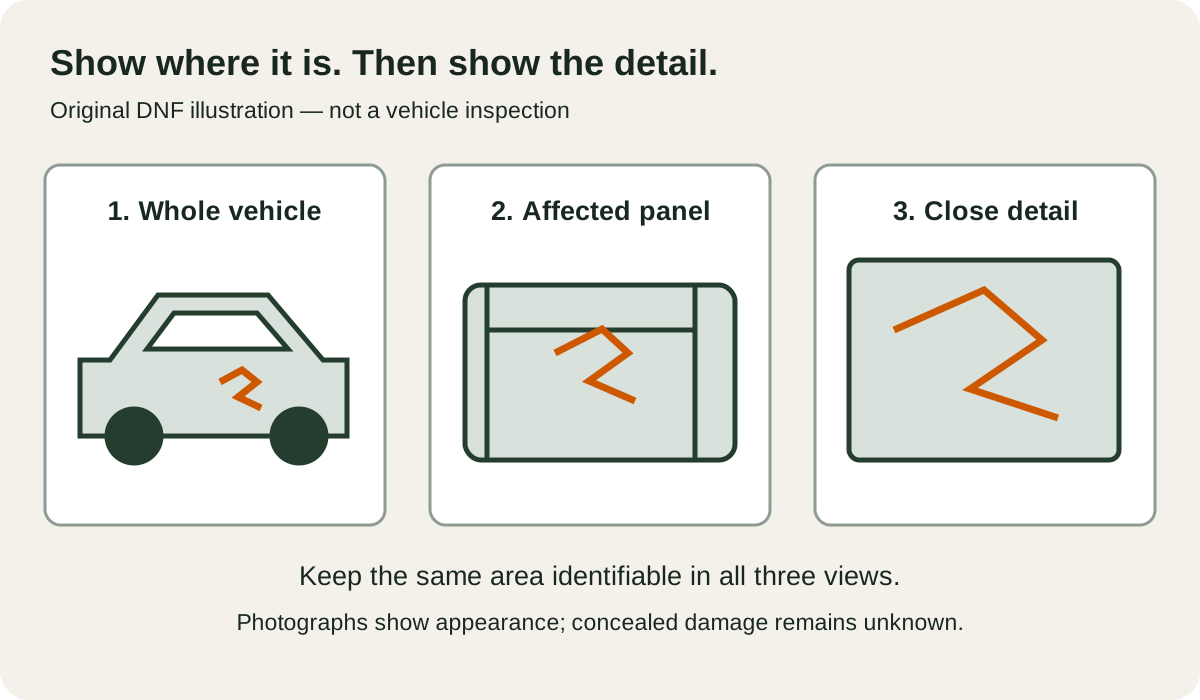
- Every damaged area, from a few steps back and then close.
- The interior: the dashboard and instrument cluster, the front and rear seats and the headliner.
- An existing odometer reading or photo, with its date if known. If unavailable, say so; do not turn the ignition on just for a photo.
- The engine bay, with the hood open.
After that, add whatever tells the rest of the story, such as the trunk, the spare tire well, the tires, missing parts, or the underside if you can get to it without risk.
Listed now
Vehicles for sale (1)Getting the damage to show
Hail dents disappear in flat light. Shoot along the panel at a low angle so the dents catch the reflection, and photograph the roof only from a stable position you can reach without climbing on the vehicle.
With collision damage, show the panel gaps, the lights, the bumper mounts and the wheel on the damaged side. Panel gaps tell a buyer more than a close-up of crumpled metal. Photograph cracked glass from inside and out.
For water damage, show the carpets and the floor under them, the seat mounts, the seat belts pulled all the way out, the spare tire well, under the dashboard, the wiring in the engine bay and any water line on the lights. The Texas DMV tells buyers to check those places for flood damage, so a buyer will look for them anyway. For fire, show any soot and melted wiring. Flood and fire damage keep a vehicle's Score in the Parts only band on DNF, and in Canada such a vehicle is listed for parts only.
Mechanical problems don't photograph well, so describe them and add a photo of any warning lights.
Words do the rest. In the damage description, say what happened, what's damaged, missing or replaced, and anything a photo can't show, like a noise. Leave out phone numbers, email addresses and links. Buyers reach you through the site, and your contact details are shared after you accept an offer and any required platform fees on both sides are paid.
Photos before you repair
If there's any chance you'll repair the vehicle yourself, take a full set before you touch it, and keep the originals. The rebuilt process often asks for them. Florida wants photos of the vehicle in its wrecked condition from at least two angles, showing all the damage. Georgia asks for photos of it before any repairs, New Jersey for photos showing each side, and Virginia for a photo before repairs. In Canada, Alberta's Rebuilt Vehicle Work Plan asks for photos of the front, rear and both sides taken before the repair.
The same photos help when you sell a rebuilt vehicle later: a buyer who can see the damage before the repair can judge the repair.
What to keep out of the frame
The listing shows the last eight characters of the VIN, so avoid clear shots of the VIN plate or the door label. Keep your license plate, house number and street out of the picture, and leave people out too. Documents with your name or address on them, like the registration or title or the insurance company's letter, go in the documents step, where they stay private.
More photos help your Score as well. Twelve or more earn the most photo points, along with a close-up of the damage, and what the DNF Score means explains the rest. List your vehicle to see your provisional Score before you publish, or browse every listing to see how other sellers show theirs.
Next questions
Use the EV condition pack for evidence that does not require energizing the vehicle.
Questions and answers
How many photos does a listing need?
At least 4, one of them a close-up of the damage. We recommend 8 clear photos for broader coverage. Listings with 12 or more earn more Score points, and buyers a long drive away rely on them.
Should I hide the worst of the damage?
No. Buyers will see it when they come to look, and offers made on clear photos are the ones that hold. Show the damage plainly and describe it in words as well.
Should I include a photo of the VIN plate, the registration or the title?
No. The listing already shows the last eight characters of the VIN, and a serious buyer can ask you for the rest. Your license plate, your name and your address don't belong in the photos either. Documents go in the documents step, where they stay private.
Why take photos before I repair the vehicle?
Because the rebuilt process may ask for them. Florida, Georgia, New Jersey and Virginia ask for photos of the vehicle before it was repaired, and so does Alberta's Rebuilt Vehicle Work Plan. Buyers of a rebuilt vehicle want to see them too.
Sources
The pages we relied on, which have the final say. Rules, fees and auction terms change, so check them before you buy, repair, register or resell a vehicle.
- NHTSA: Hurricane- and Flood-Damaged Vehicles (nhtsa.gov)
- Florida Department of Highway Safety and Motor Vehicles: procedure TL-37, rebuilt vehicles (flhsmv.gov)
- Georgia Department of Revenue: Titles for rebuilt or restored vehicles (dor.georgia.gov)
- New Jersey Motor Vehicle Commission: Salvage titles (nj.gov)
- Virginia DMV: Rebuilt vehicle examinations (dmv.virginia.gov)
- Government of Alberta: Guide to Completing a Rebuilt Vehicle Work Plan and Form (alberta.ca)
- Texas Department of Motor Vehicles: Smart Buyer series, checking for water damage (txdmv.gov)
List it free, or find your next project
List your vehicle free on DNF, with no auction. A success fee applies only if you accept an offer.
- Listed now
- Vehicles for sale (1)